
 Bank of Baroda
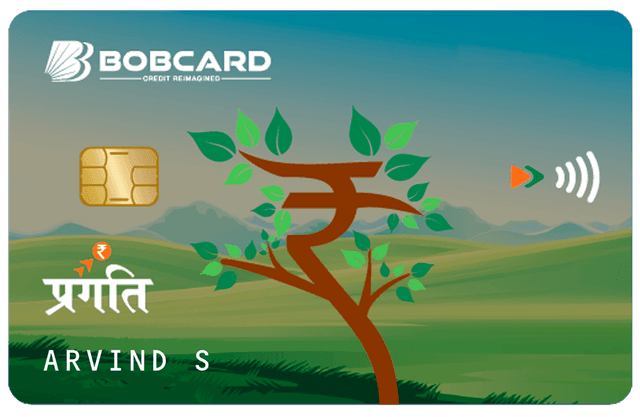
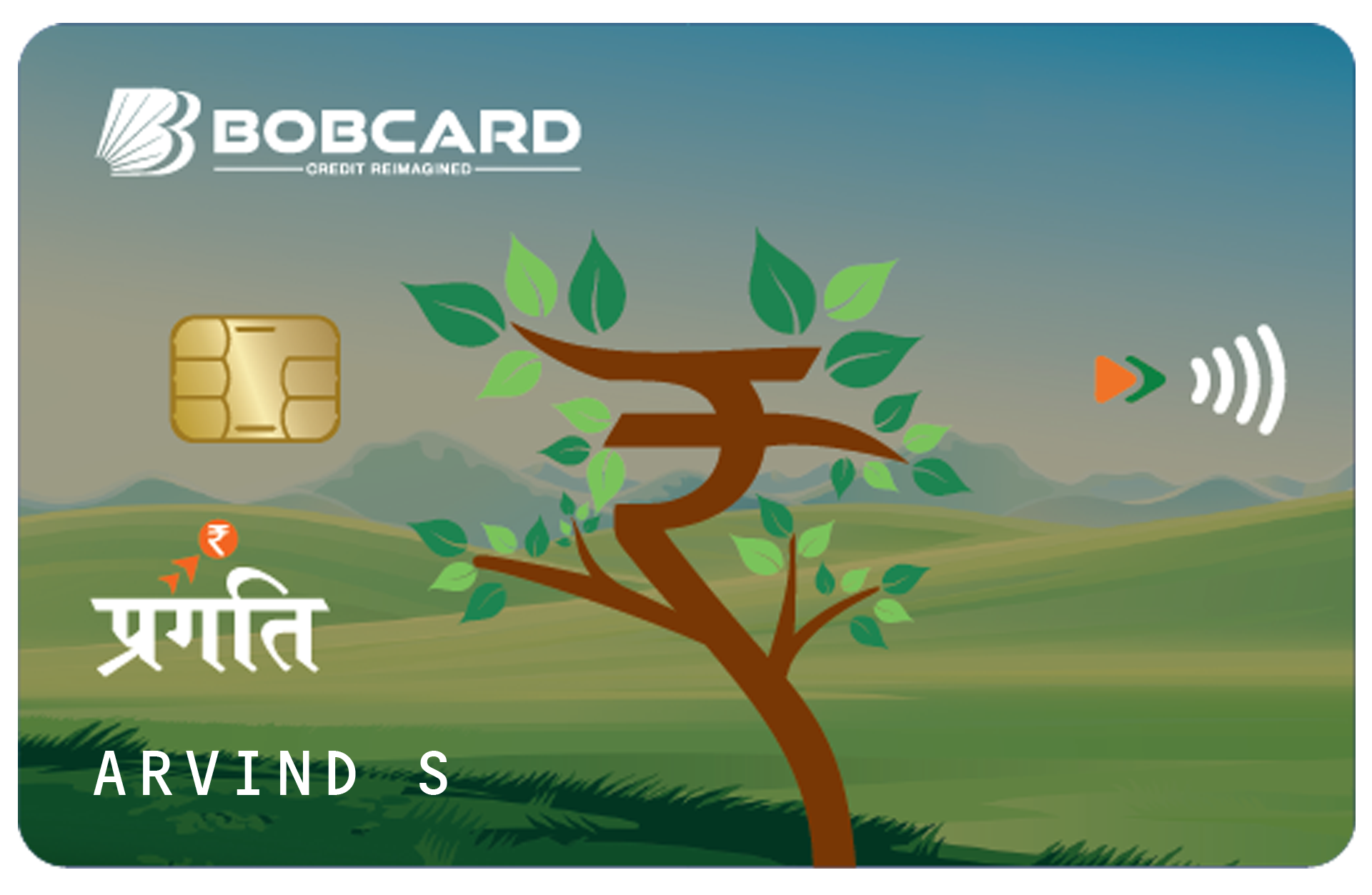
BOBCARD Pragati
Verified Official Data • Last updated 2026-08
Net Value Calculator
Drag sliders to estimate this card's annual value based on your actual spending habits.
Your Monthly Spend
₹50,000/moE-Commerce & Online
Daily Essentials
Most cards earn ₹0 rewards on fuel (surcharge waiver only).
Frequently excluded from rewards in India.
Lifestyle, Bills & Other
Almost always earns ₹0 and may carry a fee.
Often excluded or capped.
Savings & Milestones Tracker
0.27%
Value Yield (Net / Spent)
₹1,615
Annual Net Value
Milestone Benefits
How Your Spends Convert to Rewards
Live calculation breakdown for BOBCARD Pragati
| Spend Category | Monthly Spend | Reward Rate | Points Earned | Monthly Value | Annual Value | Status / Caps |
|---|---|---|---|---|---|---|
Fuel | ₹4,000/mo | 0 Pts / ₹100 | 0 pts0 pts/yr | ₹0 | ₹0/yr | Excluded |
Other Online Shopping | ₹6,000/mo | 1 Pts / ₹100 | 60 pts720 pts/yr | ₹15 | ₹180/yr | Active Earn |
Amazon Spends | ₹3,500/mo | 1 Pts / ₹100 | 35 pts420 pts/yr | ₹9 | ₹105/yr | Active Earn |
Flipkart Spends | ₹2,000/mo | 1 Pts / ₹100 | 20 pts240 pts/yr | ₹5 | ₹60/yr | Active Earn |
Dining & Food Delivery | ₹5,000/mo | 1 Pts / ₹100 | 50 pts600 pts/yr | ₹13 | ₹150/yr | Active Earn |
Groceries | ₹7,000/mo | 1 Pts / ₹100 | 70 pts840 pts/yr | ₹18 | ₹210/yr | Active Earn |
Utilities & Bills | ₹4,000/mo | 1 Pts / ₹100 | 40 pts480 pts/yr | ₹10 | ₹120/yr | Active Earn |
Travel (Flights/Hotels) | ₹4,000/mo | 1 Pts / ₹100 | 40 pts480 pts/yr | ₹10 | ₹120/yr | Active Earn |
Rent | ₹10,000/mo | 1 Pts / ₹100 | 100 pts1,200 pts/yr | ₹25 | ₹300/yr | Active Earn |
Insurance | ₹1,500/mo | 1 Pts / ₹100 | 15 pts180 pts/yr | ₹4 | ₹45/yr | Active Earn |
Other / Offline | ₹3,000/mo | 5 Pts / ₹100 | 150 pts1,800 pts/yr | ₹38 | ₹450/yr | Active Earn |
All ₹ values exclude GST. Perks like lounge access are shown separately and not added into net value. Rewards use your selected redemption mode (cashback / statement credit).
Is BOBCARD Pragati actually your best option?
Run the same spend against all 457 cards and see where this one ranks.
Key Specifications
₹0
₹250
None
3.5%
Rewards Structure
Earn rates and reward configurations verified for 2026.
Applies to all non-excluded offline/misc categories
Category Earn Rates
5X on Departmental Stores & Movies, capped at 1,000 Reward Points/statement per official terms; 1 point/₹100 on other categories
No Reward Points earned on fuel transactions
Milestone Benefits
500 Reward Points on ₹5,000 spend within 60 days of card issuance
Lounge Access
Additional Perks
Redemption & Expiry
Exclusion Honesty: This data has been verified against official bank publications. We include exclusions and point valuation friction factors to render honest net metrics in our calculations.
Official Specification Sheet
Comprehensive rules, fees, and parameters verified directly against issuer details.
| Feature | BOBCARD PragatiBank of Baroda |
|---|---|
| Joining fee | Nil |
| Annual fee | ₹250/yr |
| Fee waiver | No waiver |
| Base reward | 1 pts / ₹100 |
| Top reward categories | 5x other |
| Redemption friction | Easy |
| Point expiry | Never expire |
| Lounge access | None |
| Forex markup | 3.5% |
| Fuel surcharge | 1% waiver, up to ₹250/mo |
| Min income · salaried | Not stated |
| Min income · self-employed | Not stated |
| Eligibility (as stated) | Not stated |
| Recent devaluations | None recorded |
| Verified against | Updated 2026-08Official Bank of Baroda Credit Card Page |
Detailed BOBCARD Pragati Credit Card Review & Spends Guide (2026)
The BOBCARD Pragati by Bank of Baroda is a prominent credit card in the Indian market, categorized under the entry tier. Offering a base rewards engine of 1 reward points per ₹100, this card targets users looking to optimize their personal finances.
When evaluating the real-world value of the BOBCARD Pragati, it's essential to look beyond the joining fee of ₹0 and annual fee of ₹250. With our real-time calculator above, you can map out your monthly category spends (online shopping, dining, travel, utilities, groceries, etc.) to see if you can trigger the spend-based annual fee waiver of N/A, which determines your true Net Annual Value (NTV).
Rewards Potential & Category Multipliers
For accelerated spenders, the BOBCARD Pragati features key reward multipliers:
- 5x on other spends (capped at ₹1000/month).
- Exclusions: No rewards are earned on fuel categories.
Lounge Access & Extra Perks
Perks add immense value that calculations often leave out. The BOBCARD Pragati offers:
- Domestic Lounges: No domestic lounge visits available.
- International Lounges: No international lounge visits available.
Points Redemption and Point Expiry
Earning points is only half the battle. Redemptions are subject to a friction index of 2/5 (representing Instant digital redemption (2/5 friction)). Note: 1 Reward Point = ₹0.25 cashback. Points are valid for a lifetime (no expiry).
Who the BOBCARD Pragati benefits the most
Derived from this card's actual earn rates, caps and perks — not a generic profile.
- People whose spending is concentrated in other/offline spends — the card's strongest rate at 5 points per ₹100, though the ₹1,000/month reward cap is exhausted at roughly ₹80,000 of such spend a month, after which the boost stops. 5X on Departmental Stores & Movies, capped at 1,000 Reward Points/statement per official terms; 1 point/₹100 on other categories
- Planners who can steer spends to a target: the biggest milestone here is "500 Reward Points on ₹5,000 spend within 60 days of card issuance" — ₹5,000 of annual spend for ₹125 of value.
- People who never get around to redeeming. Redemption friction here is 2/5, so rewards convert with little effort instead of rotting in a points balance.
- Daily drivers: the 1% fuel surcharge waiver is capped at ₹250/month, which covers roughly ₹25,000 of monthly fuel spend.
Who should avoid the BOBCARD Pragati
The cases where this card quietly costs more than it pays back.
- Anyone whose spending is heavy on fuel. These categories earn absolutely nothing on this card — not a reduced rate, zero. No Reward Points earned on fuel transactions
- Travellers and overseas online shoppers. The 3.5% forex markup plus 18% GST on that markup works out to about 4.13% on every foreign-currency transaction — usually more than the rewards you earn on it.
- Light spenders. The ₹250 annual fee (₹295 after GST) has no spend-based waiver, so you pay it every year regardless. At the base rate of 1 point per ₹100 you need roughly ₹1.18 lakh of annual spend just to break even.
- Frequent flyers looking for airport comfort. This card carries no complimentary lounge access.
- High spenders expecting rewards to scale with spend. Monthly caps hold the accelerated earnings to roughly ₹12,000 a year; spending double will not double your rewards.
- Anyone reading the headline points rate literally. Each point is worth only ₹0.25, so "1 point per ₹100" is really about 0.25% back in value.
- Anyone who revolves a balance. Credit card interest in India typically runs 36–45% a year plus 18% GST on the interest — that erases every reward this card can pay, on any spending pattern.
Hidden charges and fine print on the BOBCARD Pragati
The costs that sit below the marketing page, verified against Bank of Baroda disclosures dated 2026-08.
GST sits on top of every fee you were quoted
The listed ₹0 joining fee and ₹250 annual fee exclude GST. You actually pay ₹0 up front and ₹295 at each renewal. The 18% GST is never waived, even when the bank waives the fee itself on spend — check your statement.
Forex markup of 3.5% is really 4.13%
GST at 18% applies to the markup, so 3.5% becomes about 4.13% in real terms. Also decline Dynamic Currency Conversion at foreign terminals: paying "in INR" adds another 3–5% on top of this.
The headline rate stops at a monthly cap
other/offline spends is capped at ₹1,000 of rewards a month (about ₹80,000 of spend). Caps are per statement month and do not carry forward — an unused cap in April is gone in May.
Spends that earn zero
fuel earn no rewards at all. No Reward Points earned on fuel transactions These excluded spends also frequently fail to count toward fee-waiver and milestone targets, so check the MITC before routing large payments here to "hit the target".
Redemption fine print
1 Reward Point = ₹0.25 cashback Redemption fees and minimum-balance thresholds are the most commonly missed cost on Indian cards — factor them in before comparing headline earn rates.
Fuel surcharge waiver has a monthly ceiling
The 1% waiver is capped at ₹250 per statement month, and the surcharge is usually reversed as a credit in the next cycle rather than netted off at the pump. Transactions outside the bank's stated per-transaction band may not qualify at all.
Charges every Indian card carries
Cash withdrawal fees (typically 2.5% of the amount, minimum ₹500) with interest from day one and no interest-free period, late payment fees graded by outstanding balance, over-limit charges, EMI conversion processing fees and interest, rent-payment and wallet-load fees, and payment-return charges. These are listed in the bank's MITC document, not in the marketing page — read it once before you apply.
Tax implications of the BOBCARD Pragati
Indian tax treatment of the fees, rewards and foreign spends on this specific card.
GST on fees and charges. Every fee quoted on this page excludes GST. The ₹0 joining fee bills as ₹0 and the ₹250 renewal as ₹295. GST also applies to interest, late payment fees, cash advance fees and the forex markup — it is not a one-off on the fee alone.
Are the reward points taxable? Points or cashback earned in proportion to your own spending are treated as a post-purchase discount rather than income, so a salaried individual does not pay tax on them. The same applies to the points here, valued at ₹0.25 per point on redemption. Two exceptions matter: benefits received from a business relationship (not from your own spending) can attract TDS at 10% under section 194R where the value exceeds ₹20,000 in a year, and a gift or voucher received from the bank with no link to your spending can be taxable under section 56(2)(x) if total gifts from non-relatives cross ₹50,000 in a year.
Milestone vouchers on this card. The "500 Reward Points on ₹5,000 spend within 60 days of card issuance" benefit is earned against spending, so it is treated the same way as reward points — a discount, not taxable income. If those spends were claimed as business expenses, reduce the expense claim by the benefit value instead of showing it as income.
Is the annual fee deductible? Not for a salaried cardholder — it is a personal expense. If the card is genuinely used for business or professional spends, the ₹295 renewal is an allowable business expense under section 37(1), and a GST-registered business billed in its own name can claim the ₹45 GST as input tax credit.
Foreign spends, TCS and the LRS. The 3.5% markup attracts 18% GST, making it about 4.13% effectively. TCS under the Liberalised Remittance Scheme runs at 20% above ₹10 lakh of remittances in a financial year; international credit card spends have so far been kept outside the LRS pending notification, so no TCS is deducted at the till today. Where TCS is collected on any remittance, it is not a sunk cost — it is creditable against your tax liability and refundable through your ITR.
Spends the tax department can see. Aggregate credit card payments of ₹10 lakh or more in a financial year (₹1 lakh or more if paid in cash) are reported by Bank of Baroda in the Statement of Financial Transactions and show up in your AIS. That is not a tax by itself, but the spending should be consistent with the income you declare.
Eligibility and documents for the BOBCARD Pragati
Bank of Baroda does not publish a numeric income requirement for this entry-tier card.
Eligibility
- Income: Bank of Baroda does not publish a figure for this card. Expect the usual entry-level threshold of roughly ₹20,000–₹30,000 a month, confirmed at application.
- Age: typically 21 to 60 for salaried applicants and up to 65 for self-employed; add-on cards from 18.
- Credit score: a CIBIL score of 750+ materially improves approval odds on any card, including this one.
- Residency: resident Indian with a verifiable address in a city Bank of Baroda services.
Documents required
- Identity: PAN card (mandatory) plus Aadhaar, passport, voter ID or driving licence.
- Address: Aadhaar, passport, utility bill or registered rent agreement.
- Income (salaried): last 3 months' salary slips and 3–6 months' bank statements showing salary credit; Form 16 for the latest year.
- Income (self-employed): latest 1–2 years' ITR with computation, audited financials where applicable, and 6 months' current account statements.
- Photograph: one recent passport-size photo (often skipped in a full digital journey).
- Existing Bank of Baroda customers with a salary or pre-approved relationship usually skip the income documents entirely.
Nomination note: a credit card has no nominee — nomination applies to deposits and investments. What matters here is that your family knows the card exists and knows the outstanding, so it can be settled from the estate promptly instead of accruing interest and late fees after the fact.
How to apply for the BOBCARD Pragati
- Check for a pre-approved offer first. Log in to Bank of Baroda net banking or the mobile app. A pre-approved journey skips income documents and, more importantly, avoids a hard enquiry on your credit report if you are declined.
- Confirm the current fee and rates on the official page before applying — banks revise these without much notice.
- Apply online with PAN, Aadhaar and employment details, or walk into a Bank of Baroda branch if your income profile needs manual assessment.
- Complete KYC. Most issuers now offer video KYC that finishes in minutes; physical verification adds a few days.
- Confirm the credit limit before activating. The limit determines how much of your spending you can actually route here, which is what the reward maths above assumes.
- Set a full-payment auto-debit on the due date the day the card arrives. Interest of 36–45% a year plus GST is the single fastest way to turn this card into a loss.
BOBCARD Pragati — frequently asked questions
Answers use this card's own numbers, verified 2026-08.
What is the annual fee for the BOBCARD Pragati, and can it be waived?
The annual fee is ₹250 plus 18% GST, so ₹295 actually leaves your account. Bank of Baroda does not publish a spend-based waiver for this card, so the fee recurs every year.
How much do you actually earn on the BOBCARD Pragati?
The base rate is 1 point per ₹100, and each point is worth ₹0.25 at the best redemption — roughly 0.25% in value. The accelerated categories are other/offline spends at 5 points per ₹100.
Which spends earn no rewards on the BOBCARD Pragati?
fuel earn zero. No Reward Points earned on fuel transactions If those categories are a big share of your monthly outgo, your effective return will be well below the advertised rate.
Does the BOBCARD Pragati offer airport lounge access?
No. This card carries no complimentary lounge visits. If lounge access matters to you, look at a card that states a visit count in writing.
What does the BOBCARD Pragati charge on foreign currency spends?
A 3.5% markup, plus 18% GST on that markup, so about 4.13% effectively. On a ₹1 lakh foreign spend that is roughly ₹4,130.
Do reward points on the BOBCARD Pragati expire?
No — points on this card do not carry a stated expiry. That does not protect you from devaluation, only from lapse.
Is there a cap on rewards from the BOBCARD Pragati?
Yes. The tightest is other/offline spends at ₹1,000 of rewards a month, which you hit at about ₹80,000 of monthly spend in that category. Caps reset each statement month and unused headroom does not carry forward.
What milestone benefits does the BOBCARD Pragati offer?
500 Reward Points on ₹5,000 spend within 60 days of card issuance at ₹5,000 of annual spend (worth about ₹125). Excluded categories usually do not count toward these targets — verify in the card's MITC.
Is the BOBCARD Pragati annual fee tax-deductible, and are reward points taxable?
For a salaried cardholder the fee is a personal expense and is not deductible. If the card is used genuinely for business or professional spends, the fee and GST can be claimed as a business expense (and the GST as input credit where the card is billed to a GST-registered entity). Reward points earned in proportion to your own spending are generally treated as a post-purchase discount, not income, so they are not taxed in your hands.
Is TCS applicable on BOBCARD Pragati spends abroad?
Tax Collected at Source under the Liberalised Remittance Scheme applies at 20% above the ₹10 lakh annual threshold for remittances and forex card loads. International spends on Indian credit cards have so far been kept outside the LRS pending notification, so no TCS is deducted at the point of sale today. This has been changed and deferred more than once — confirm the current position with Bank of Baroda before a large overseas spend. Any TCS actually collected is not a cost: it is creditable against your income tax liability and refundable when you file your ITR.
What happens to the BOBCARD Pragati account after the cardholder's death?
A credit card is an unsecured personal liability and cannot be inherited or transferred — the card must be surrendered and closed. Inform Bank of Baroda in writing with the death certificate; the outstanding balance becomes payable from the deceased's estate, and the legal heirs are liable only to the extent of the assets they inherit, not personally. Any add-on cards stop working immediately. Unredeemed reward points are normally forfeited on closure, so a family member holding a large balance should redeem while the account is active. Nomination applies to deposits and investments, not to credit cards — but if there is a fixed deposit backing a secured card, the nomination on that FD governs its release.
Similar & Alternative Cards
Explore other top-rated Entry-level credit cards in India

HDFC Bank Pixel Go Credit Card
Shaurya SBI Card
Axis Bank Pride Platinum Credit Card
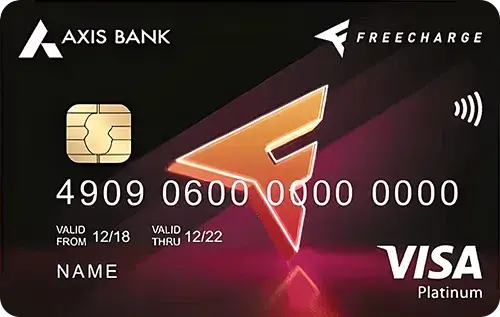
Axis Bank Freecharge Credit Card
Indian Bank RuPay Classic Credit Card
TMB WINGS RuPay Credit Card
Related Guides & Tools
Ranked card lists BOBCARD Pragati appears in, plus calculators for card debt decisions